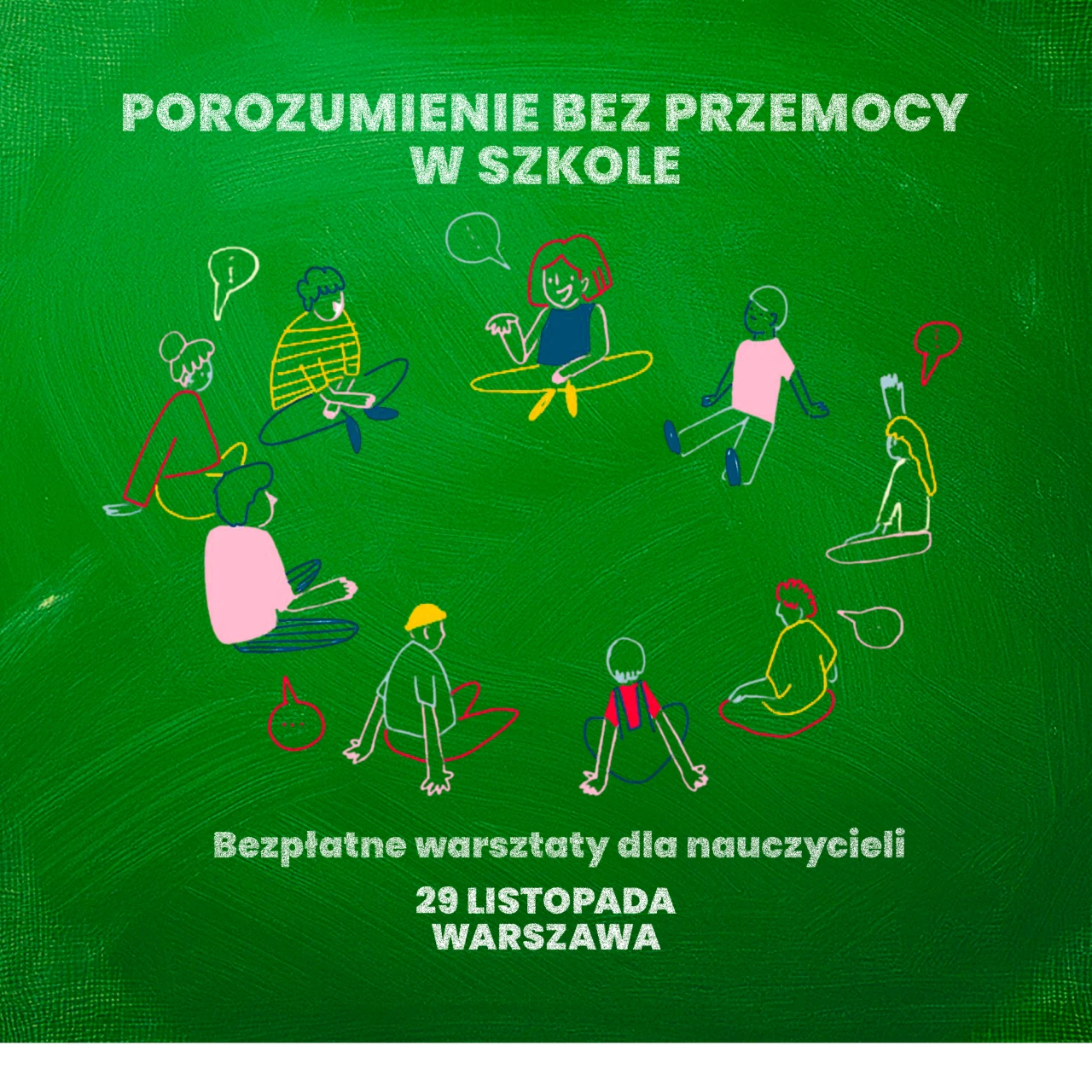
Building bridges instead of walls
Do you sometimes feel helpless in the face of your students’ “challenging” behaviors? Or perhaps you would like the relationships in your classroom to be based on respect and cooperation?
This workshop will show you how to bring more empathy, calm, and understanding into everyday school life.
Who is it for?
- teachers
- class tutors
- school counselors
- anyone working with young people
What will you gain?
- tools for dealing with “difficult” situations in the classroom
- strategies to protect your own boundaries while maintaining relationships
- the language of empathy to support conflict resolution
- a greater sense of calm, confidence, and satisfaction in your work
- an atmosphere of trust and cooperation in your school
The workshop is highly practical – we work with real-life school situations through exercises, role plays, reflection, and exchange of experience.
All participants will receive a certificate of attendance.
Format
One-day workshop (8 hours, 10:00–18:00)
Includes a lunch break (1 hour) and two coffee breaks (15 minutes each).
Venue: ul. Okrzei 6/49, 1st floor, Praga Północ, Warsaw
Topics covered during the workshop
- Introduction to Nonviolent Communication (NVC) and the work of Marshall B. Rosenberg
- Core principles of NVC
- Common communication blocks in relationships with youth and adults
- Criticism and difficult messages – 4 listening perspectives
- Self-empathy – caring for emotional and physical wellbeing as a teacher
- Interpersonal neurobiology – how emotional safety and trust affect the nervous system
- The 4-step NVC model (observation, feeling, need, request)
- Honest self-expression and protecting personal boundaries
- Listening to others with empathy
- Receiving a “no”
- Dialogue as a pathway to connection
About NVC
Nonviolent Communication, developed by Dr. Marshall Rosenberg, is an approach to communication aimed at building deep, empathic human relationships.
It is based on the idea that all our actions stem from attempts to meet specific needs – conscious or unconscious – such as safety, acceptance, or belonging. By becoming aware of our own needs and those of others, we can better understand ourselves and our environment, and increase the chances of being heard and considered, even in difficult or conflictual situations.
Practicing NVC makes conflicts easier to resolve, deepens relationships, and fosters communication based on respect, understanding, and authentic connection.
For teachers, NVC supports healthy boundary setting, mutual respect, and building strong relationships through dialogue.
More about NVC: www.cnvc.org
Trainers
Paulina Orbitowska-Fernandez – certified NVC and eduScrum trainer, coach, academic teacher and English language teacher, mediator, and Resonant Healing practitioner. She has international experience in Mexico (universities and IB schools) where she also served as a school director. Since 2017 she has been sharing her knowledge in the fields of education, business, and healthcare. Currently affiliated with Collegium Civitas.
Agnieszka Gwadera – creator of the COBONA approach, movement instructor, and dancer. She designs original classes that combine movement, improvisation, and mindfulness with relational awareness. She brings together NVC, embodied work with emotions, and improvisation to create spaces of authentic encounter. Participant of Erasmus+ international trainings in empathic communication and embodied emotional work.
Build relationships based on trust, cooperation, and respect.
Join the workshop and discover how NVC can transform your classroom!
Workshops will be held in Polish Language
More about the workshop: https://drive.google.com/file/d/1PEFKYj9Ag0kN7MaJWDsGYdORTCHOzG0j/view?usp=share_link
Registration form: https://forms.gle/QzcEPsusJg8XVKHK7