
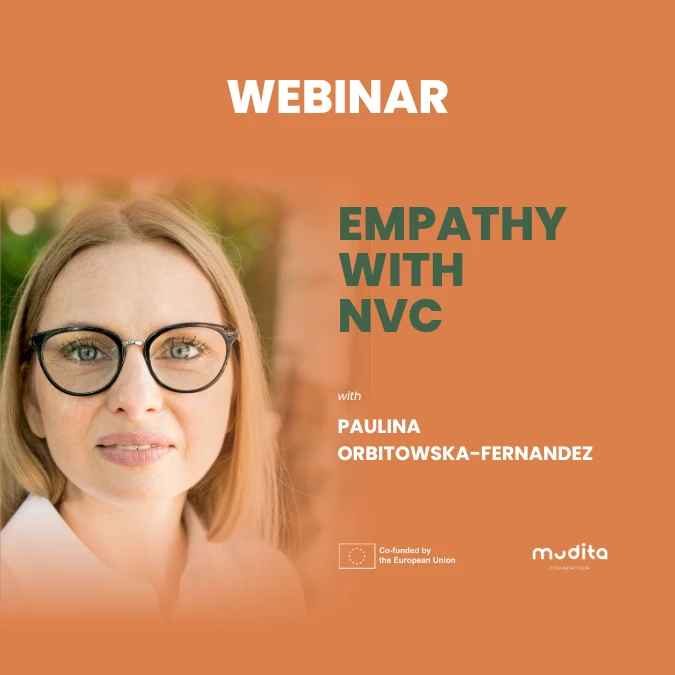
On September 8, 2025, as part of the Building Bridges Erasmus+ project, we hosted an inspiring webinar dedicated to empathy in the approach of Nonviolent Communication (NVC). The event brought together youth workers, educators, and facilitators from across Europe to continue the learning journey that began during our international training course.
The webinar aimed to share the results, best practices, and key insights developed throughout the project, promoting the values of empathy, understanding, and effective communication in youth work. It was part of our broader dissemination efforts to make NVC-based practices accessible to a wider audience and inspire similar initiatives across Europe.
Led by an experienced and certified NVC trainer, the session explored how empathy can become a foundation for authentic connection and collaboration – both in personal relationships and in educational contexts. Participants reflected on:
- what empathy truly means in the NVC framework,
- how to connect through empathic listening,
- what blocks empathy,
- four ways of hearing difficult messages,
- how to enrich relationships through empathy,
- and how to integrate NVC practice into real-life situations.
Through interactive exercises, real examples, and shared reflections, participants discovered how empathy can transform communication, prevent misunderstandings, and strengthen relationships – within youth work and beyond.
The webinar was part of the dissemination activities of the Building Bridges project, co-funded by the Erasmus+ Programme of the European Union, which promotes international cooperation, empathy, and the development of key competences in youth work.
🎥 Missed the live session?
You can now watch the full recording here and explore how empathy can deepen understanding, connection, and collaboration in your daily life and work:
👉 Building Bridges – Empathy with Nonviolent Communication – webinar
“When we listen with empathy to another person, we give them the opportunity to reconnect with their own inner resources.”
Marshall B. Rosenberg